Historiai

  • The last few posts have been a bit political. I’m not apologetic for that, I find the politics intriguing and thought I might have some interesting insight into stuff. At the same time though, it’s not my bread and butter lol. I’m an ancient historian by trade and training and that’s ultimately where my passion lies, so this week I’m going back to Classics!

    A couple weeks back I took part in a Classics contest. It’s more interesting than it sounds, I promise. Long and short was that you had to write a manifesto for Classics. That was the only brief, you could be positive, you could be negative, you could talk about how it was being taught, how it was being received, whatever you wanted. Now, I’m a sucker for ranting about Classics, so this was well up my street. Plus there was cash money as a prize, and I’m a student so I’ll basically sell my soul for the right price.

    Anyways, I wrote about Classics education from my perspective as both a PhD student, a university tutor and a more public facing historian. That last one is because of my work for Kings and Generals btw, not because of this blog which probably barely counts as public considering the readership is limited to basically me, my mum, and a few lovely unknown souls scattered around the world. But I digress. So, I wrote this manifesto which is kinda targeted towards other people teaching Classics, but I thought might be of interest to others. So, without further ado, I present my Classics Manfiesto.

    Classics Education: A Manifesto for Today

    To be an educator in Classics means being a curator of some of humanities greatest treasures. Our most powerful ideas, most awe-inspiring art, and most heart-wrenching stories,all are contained in the realm of a Classicist. It is a tragedy then that the Classics community has largely failed to share these treasures with the public, as should be our obligation. We have been pushed from the table of public discourse, and our places taken by people who would weaponize history as a tool to divide, by people who quote Marcus Aurelius in one breath and Andrew Tate in the next. Now we Classicists, we who are the custodians of giants like Sophocles, Aristotle, and Cicero beg for scraps from the table of discourse. For shame! It is high time that we regain our seat at that table where we are needed now more than ever.

    How did it even come to this in the first place though? There are, to my eye, three main factors. The first is that we have created an astonishingly high barrier of entry for learning about Classics, even for those who attempt to study it at university level. For instance, many of the most important modern texts are prohibitively expensive for students with ‘Brill’s Companion’ series charging £185.00 for the Companion to Macedonia, £238.00 for Ovid and an astonishing £262.00 for Herodotus! A sufficiently stocked library can mitigate this, but these are rare and not available to all. Moreover, a web of abbreviations and shorthand built up over centuries from scholars around the world has resulted in a nigh impenetrable system. There will be references such as “Smith pp. 5ff” or “Pace Brown” which, though intelligible to those in the know, rely upon you being in the know. Is the reference for this or that treaty IG II2190, SEG 14:45 or EM7019? Wrong, it’s all the above! Any student of Greek history will also, no doubt, need to refer to the essential Inscriptiones Graecae which to this day, in 2024, is still written in Latin![1]  Inevitably, they will also require the use of Fragmenta Historicorum Graecorum. This invaluable resource has been digitised, which is excellent, but only in ancient Greek and Latin. Let me be clear here: these last two points are particularly egregiousfailings. There is no justification at all for these texts to not be written in modern languages, save for the lame duck excuse of tradition. The study of ancient languages is, of course, important to any Classicist, but it is absurd to hide such vital texts behind such a high language barrier.  How on earth can we begin to engage the public with our subject when we already make it purposefully inaccessible to all but the most stubborn Classics students? What message do these decisions send to an interested and enthusiastic student with little linguistic knowledge but a snobbish sneer from days gone by? These obstacles result in less students studying the subject to a high university level, resulting in less educators of Classics and thus a less classically educated population overall.

    This brings us to the second major failing, our inability to communicate ideas clearly for the public. In just under 200 years, the scientific community has successfully been able to explain such heady concepts as germs, climate change and evolution to all but the most dedicated anti-science fanatic. Yet, even with centuries worth of a head start, we have been unable to similarly provide the public with a solid grasp of source analysis, a chronology of the ancient word, or even the fact that Atlantis was just a metaphor! 57% of Americans believe that advanced ancient civilisations, such as Atlantis were real.[2] That’s roughly 191 million people. And it’s rising. We are losing this fight and, perhaps most depressing of all, we’re losing it to the likes of crackpots such as Giorgio Tsoukalos or charlatans like Graham Hancock. These figures and others like them, have utilised mediums that the public can easily access, such as YouTube and Netflix. Meanwhile, academics of Classics are trapped in system that forces them to publish or perish for niche journals that are utterly unknown to the public. The result is that that those who should be our best advocates are forced to justify their livelihoods every day while the spaces they ought to occupy are taken by people whose interest in historical truth is as deep as a flattened teaspoon.

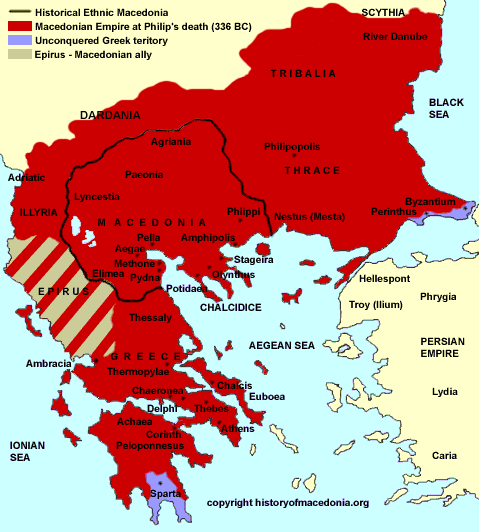
    But now our final and most grievous failing: we have not shown our subject to be the incredibly uniting force that it is. Instead, it is being used to divide and to hate. Just look at the bitter bickering of the Balkan states over which one can truly claim to the legacy of Alexander the Great.[3] Look at how the white nationalist and alt-right movement has weaponised pseudoarchaeology against people of colour.[4] Look at how the contorted and confused readings of the ancient world are used to justify homophobia.[5] How dare these people invoke our subject to justify their perverse hatreds! But this is, in part, of our own doing and stems from the previous two failures. The obstacles that have prevented people from learning about Classics, and the lack of more easily accessible and understandable information for the public has resulted in the subject being perverted by disingenuous actors into a weapon to divide. And there is no greater tragedy in Classics then that.

    It is not too late to act though. Firstly, we must recognise that to have a public that is knowledgeable about Classics we need to do better at fostering a pool of people who can provide this. Too often, I think that the assumption is that people do not study Classics or ancient history because they are not interested in it, and that we must create that interest. This is incorrect. A brief dive into the history side of YouTube will show tens of millions of people watching two-hour long videos on ancient history, while Netflix has produced a myriad of shows in the last 10 years about the ancient world.[6] I can speak here from personal experience. I am now a PhD candidate and tutor, but when I had little more than a B.A. under my belt and was painfully naïve, I wrote and researched the scripts for Kings and Generals Gallic War series. It now has just under 10 million views.[7] A population the size of Austria has garnered much of their knowledge of Caesar and the Gallic Wars from a 22-year-old with an undergrad degree. To be clear, this is not a boast it is a warning. The interest in the subject is there but that interest is currently being curtailed to, mostly, not by Classicists or scholars, but by amateur historians whose reliability varies drastically. We must correct for this by removing some of the obstacles that make studying the subject such a complicated process. Resources that are integral to the subject need to be translated into modern languages, universities should equip students with the ability to parse citations by providing classes that explain the technical vocabulary and shorthand, and there must be a greater focus on making modern texts more readily and freely accessible. In doing so, we can hope to produce a larger body of Classicists to meet the already existing demand for our subject.

    Secondly, we as educators must be better at communicating with the public. Part of the reason why Classicists are losing the fight against pseudo-historians and pseudo-archaeologists is that they have been far more effective in leveraging resources such as YouTube. When someone wishes to learn about the politics of the Late Roman Republic, they do not turn to Historia: Zeitschrift für Classics, they turn to YouTube. An article in the former may, if lucky, be read by a couple of hundred people, but a video on YouTube video can get millions of views within weeks. Rather than seeing an academics only worth as being able to produce academic scholarship, it should be equally valued to make something that is more accessible to the public. We happily give sabbatical to professors to publish books and articles, as we should, but a similar offer should be made for those who want to make a video series on YouTube or find some other means to communicate with the public. Sites such as YouTube are incredibly powerful resources, and are, more and more, where people are going to learn; we must involve ourselves more in this area and recognise it as a legitimate form of educating the public.

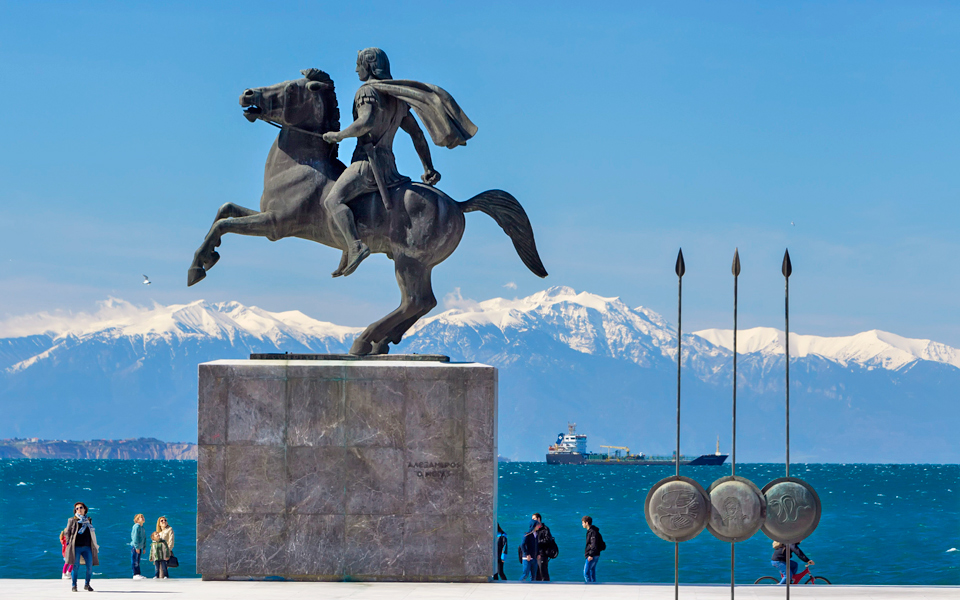
    Lastly, and most important of all, in these times when it seems that we are being divided more than ever, we must show the incredible unifying power of our subject. In days gone by, people used to appeal to the Classics as a unifying idea whether that be the Germans with Arminius or the French with Vercingetorix. Usually, the motive behind these was little more than cynical nationalism, but they do show the uniting power that Classics can have. We must now it take it a step further with purer intent and proclaim that the triumphs and tragedies of people from the ancient world unite us all as part of our shared global history. Alexander does not belong to the Greeks or the Macedonians, he belongs to all of us from Japan to America; the wonder of the Pyramids should not be used as a tool of the Egyptian state,[8] they should serve as an inspiration to us all and the wonders that we as a species can create; the great political philosopher Chanakya is not a person to be weaponised by Indian Nationalists,[9] he is a figure whose life and lessons are to be shared with the world. These treasures of the past do belong to a group who, by random chance, happened to be born in the same geographical vicinity as that person or accomplishment, they are to be claimed by all humans. The thousands of years that have past and the myriad cultures that have intertwined over the years means that any purported ethnic or national ‘link’ to these things is meaningless. The only link of meaning is that they belong to humanity and we, as Classicists, need toshow the unifying power of that statement.

    Classicists must reclaim their place at the table of public discourse. For too long, we have been the architects of our destruction, conjuring up needless obstacles and allowing charlatans and con-men to fill the voids in public discourse that we have left. Classics must adapt and modernise, removing the needless obstacles and making information more accessible and understandable. We must do this, not for power, financial gain, or recognition, but because it is our obligation to the public to do so. When, as we so often are, we are asked “What value is there in studying Classics?” we too often point meekly to soft skills, such as critical thinking. True as this is, it is a claim that any humanities subject can make. And if we’re honest with ourselves, is that why we first fell in love with Classic? I know it’s not why I did. I love this subject because it is the study of the human experience, because it is the foundations upon which our modern literature, politics, and history are built. What Classics provides as a subject is not just soft skills, it provides the first chapters in the book of humanity and if we ever hope to have any understanding of our current place in the narrative, we must look to what came before. In this toxic age of disinformation and division, this is needed more than ever. These poisons have antidotes, and they are embedded at the heart of Classics: source analysis, a love of knowledge for knowledges sake, and history that unites the world. As the custodians of the ancient world, it is our moral obligation to step up to that responsibility.


    [1] A copy of either of the main books the compose IG I3 will set you back approximately £800 or £900. Free shipping though!

    [2] Wade, 2019: Beliefs in aliens, Atlantis are on the rise

    [3] North Macedonia named Skopje’s main airport after Alexander the Great, among other forms of ‘antiquisation’ has led to tense relationships between North Macedonia and Greece: Ghosts of the Past Endanger Macedonia’s Future | Balkan Insight, including official complaints from Greece: Athens complains about Skopje arch | eKathimerini.com. The Ancient Macedonians have been claimed by a number of Balkan states, J. Engstrom ‘The Power of Perception: The Impact of the Macedonian Question on Inter-ethnic Relations in the Republic of Macedonia’ The Global Review of Ethnopolitics Vol. 1, no. 3, (2002), 3-17, including Albania, Lubonja, F. “Between the glory of a virtual world and the misery of a real world”. In Schwanders-Sievers, Stephanie; Fischer, Bernd J. (eds.). Albanian Identities: Myth and History, (2002) and Bulgaria and Serbia: Marinov, T. Famous Macedonia, ‘The Land of Alexander:
    Macedonian identity at the crossroads of Greek, Bulgarian and Serbian nationalism’ in Dontchev Daskalov, Roumen; Marinov Tchadar (eds.) Entangled Histories of the Balkans. Vol. 1

    [4]Perhaps the most egregious example was the recently defunct “Identiy Evropa” whose rhetoric has permeated the white nationalist movement despite their disbandment, see: Denise Eileen McCoskeyDonna ZuckerbergCurtis Dozier , “Classics and the Alt-Right Conundrum” , Origins: Current Events in Historical Perspective July, 2018 https://origins.osu.edu/index.php/historytalk/classicists-and-white-supremacists%20alt-right%20trump%20western%20civilization%20culture , Classics and the Alt-Right: Historicizing Visual Rhetorics of White Supremacy – Learn Speak Act, Classicizing Identity: The Alt-Right, Art, and Archaeology. Steve Bannon also stands out as a notable example: Why the White House Is Reading Greek History – POLITICO Magazine

    [5] Mike Johnson, the current U.S. House Speaker and a fervent supporter of conversion therapy for homosexuals (!) believes that the fall of the Roman Empire was a result, in part, because of homosexuality: Hear House speaker’s past comments blaming the fall of the Roman Empire on homosexuality | CNN Politics. This view was also shared by then Presidential candidate, and also  Ben Carson: Ben Carson Blamed Same-Sex Marriage For “Dramatic Fall Of The Roman Empire”. A litany of other examples can be found on the excellent site, Pharos: Pharos – Doing Justice to the Classics

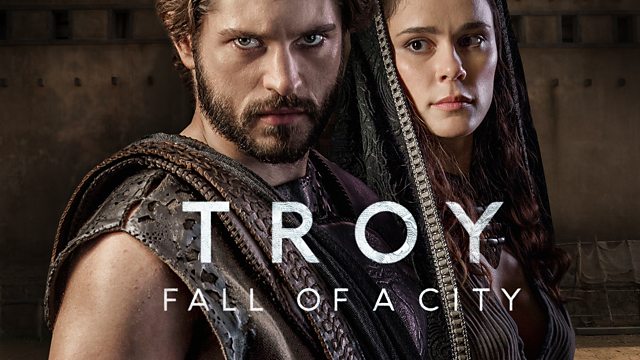
    [6] To give two examples, Historia Civilis on Youtube almost always has over a million, and often nearer 2 or 3 million, views on videos about ancient history. Kings and Generals long form videos on ancient history (a few written by yours truly) regularly also get millions of views. On Netflix, shows like Barbarians, Roman Empire, Troy: Fall of a City, Blood of Zeus, Alexander: The Making of a God and Queen Cleopatra spring to mind.

    [7] https://www.youtube.com/watch?v=LRV185XaMIM

    [8] There is a current trend by the modern Egyptian state under President Sisi to use ancient Egyptian monuments, like the Pyramids, to foster extreme nationalism, coined neo-Pharaonism: Egypt’s Racial Nationalism: Neo-Pharaonism as a Tool of the State – The Tahrir Institute for Middle East Policy. This is part of a trend that has been in place for decades, see: Wood, M. ‘The Use of the Pharaonic Past in Modern Egyptian Nationalism,’ Journal of the American Research Center in Egypt , 1998, Vol. 35 (1998), pp. 179-196

    [9] ‘Chanakya Dialogues’ is the current name of an Indian far-right media channel run by Gaurav Arya who recently called for the overthrow of Canada’s government, Well-Connected Pro-Modi Media Personality Calls On India to Support ‘Right-Wing Parties’ in Canada’s Next Election, and that the UK far right are the true patriots: Major Gaurav Arya Calls Far-Right Activists The True Patriot Of UK | Illegal Immigration. Alongside this, Amit Shah of the current nationalist BJP party has been dubbed ‘Chanakya’ bjp chanakya – Google Search. For more on the use of Chanakya and Indian nationalism in the 90s and before, see Chakravati, U.’ Saffroning the Past: Of Myths, Histories and Right-Wing Agendas’ Economic and Political Weekly , Jan. 31 – Feb. 6, 1998, Vol. 33, No. 5 (Jan. 31 – Feb. 6, 1998), pp. 225-232

  • This is an article about how the American Republic has already fallen. Not that it will fall, but that it already has. I understand that this may be interpreted as some as hysterical, radical or doomsaying. It is not intended as such. I write this with no intended pessimism, and I do not feel particularly morose. I also do not identify with any political ideology in any meaningful way, so this should not be read as being in any way partisan. I write this simply from the stance of an interested student of history who feels that this is a subject worthy of commentary and that I find intriguing. Please try to read it in that spirit.

    The fall of the Roman Republic is a difficult event to quantify. Attempting to judge what caused the fall is inextricably tied to the question of when it fell, which is not an easy question to answer. Imagine, if you will, that rather than talking about a political institution, we are talking about a war and trying to determine when it was lost. Take World War 2 for example, when did the Axis powers lose the war? Semantically, we would say 2nd September 1945 when Japan signed the surrender documents. Hirohito announced that Japan would surrender on 15th Augustus 1945 though, so surely that was effectively the end of the war. But the first atomic bomb was dropped on the 6th and once this happened, Japan’s surrender was inevitable, so the war was lost by that point. When Nazi Germany surrendered on May 7th, Japan’s defeat was inevitable through, so perhaps that’s a better date. Strong arguments could be made for 11th December 1941 when the Americans joined the allies, or the 22nd June 1941, when Hitler invaded Russia, two evens which both arguably put the Axis powers on an inevitable path to defeat. It could even be argued that the war was lost from October 1940 when it became clear that Germany would not be able to invade the U.K., or even more dramatically, that the war could never have been won by the Axis and was effectively lost from the start. I’m not giving any preference to any of these dates by the way, I’m just highlighting how easily dating can vary depending on how we interpret the question. These same kinds of problems emerge when we attempt to establish when the Roman Republic fell.

    Res Publica, the root of our word Republic, was a somewhat vague concept meaning “the thing of the people”. It didn’t carry the same connotations of a political system that the modern word “Republic” has, though there were of course traditions and customs that were part of the general idea of Res Publica. But this vagueness means that we find Rome being called Res Publica even in the 7th century AD (History of the Lombards, 4.36). If we were to be semantic it could be argued that the Roman Res Publica only ended when the Byzantine Empire did. This seems to deliberately miss the intended meaning of the question though, so let’s try to find another date.

    27BCE is a tempting date, because this is when Augustus was conferred all the powers that effectively made him Emperor.  Augustus may have just been an anomaly though, so perhaps 14AD is a better date because that is when Augustus died and, crucially, managed to pass on his powers to his chosen heir, Tiberius, thus cementing the fact that power in Rome would be effectively hereditary. These work from a perspective of political definition as in, the structure of power during Augustus’ reign shifted from power derived from elected representatives of the people with various assemblies checking power, to power being focused in the hands of one man. However, they again seem almost too technical. Augustus seems more to be the nail in the coffin, but it is surely the case that Augustus could not have become Emperor unless the Republic had already fallen. Again, we seem to need an earlier date.

    49BCE, when Caesar crossed the Rubicon is a popular suggestion. Here we have a man who used military force to seize control of the Roman government and had himself proclaimed dictator. This is a clear violation of any reasonable definition of a “Republic” and so perhaps this is the better date. But Caesar was not the first man to do this. Sulla, in 82BCE, marched on Rome and seized power by force and proclaimed himself Dictator. The Republic had been violated, it’s processes flagrantly disregarded, and its constitution adjusted by one man. 82BCE is certainly the most compelling date so far: it was a clear moment where the constitution of the Republic was fundamentally broken. Once again though, I feel like we have a similar problem as we did with Augustus: how could Sulla have done this if the Republic was intact? The taking of government by force surely does not precede the fall of a constitution, it is symptomatic of one that has already fallen.

    What we need to do is point to try and identify the moment when the Roman Republic’s constitution was broken beyond repair. We have seen that by 88BCE, it was already shattered so such an extent that Sulla could seize power by force, so we need to look back and consider other examples of the Roman constitution being abused. 205BCE is interesting, because this is when Scipio Africanus was first made Consul, despite being underage, and demanded the province of Africa, threatening to bypass the Senate if this was not allowed. This event is, in my opinion, rather underappreciated in discussions of when the Republic fell as it is a clear example of an individual strong arming the constitution and the constitution buckling in the face of it. The reason it is not given a lot of weight though is probably because this happened in war time and was clearly an extraordinary measure. After the Second Punic War, the Roman Republic seems to have continued to function healthily enough: the growing influence of the Scipii were challenged via proper legal channels and the Scipii effectively took the hit, paying any fines that they were charged with. They remained popular of course, and many of their allies won Consular elections, but a group being popular and influential is not, in and of itself, a death knell for a Republic. The Republic appears to have been functioning properly at the start of the 2nd century BCE, so we know that event that led to the fall of the Roman Republic occurred sometime in the 2nd Century BCE sometime after about 170BCE.

    We now come to the event which, in my opinion, should be considered the fall of the Roman Republic. Some reading this may well have guessed what that was, but to those who don’t, it was the life and death of Tiberius Gracchus. In order to try and force through much needed land reform, Gracchus used unconstitutional and illegal means. Again, we see the Republic bending here just as it with Scipio. The crucial difference here though is that Tiberius Gracchus was murdered by Nascia, a political rival, for his actions. That is when the Republic broke.

    Republic’s, by their nature, are slow moving creatures. The various checks and balances and obstacles put in place to attempt to stop any one man getting too much power mean that progress is slow. For those who want to see immediate change, as Tiberius did, it may seem that the only way to effect that change is to bypass these elements. For some, such as Nascia, the most effective way to implement desired changes is political violence. Both methods, bypassing the constitution and political violence, are effective means of forcing immediate changes in a Republic. However, they also break the rules of the game. Once it has been shown that these kinds of drastic measures can work, they will be taken further and further by others.

    We see this in Rome. The murder of Tiberius Gracchus was the first time in the history of the Republic that a high-ranking politician was killed by a political rival. In the decades that followed, political violence became a norm of Roman politics. In 121BCE, Tiberius’ brother Gaius would also be murdered, and Glaucia, Memmius and Saturnius were all killed in 100BCE by each other’s rival factions. Marius and Sulla took political violence to its natural and logical conclusion in the First Roman Civil War, and Sulla used the Dictatorship to purge his political opponents. In 63BCE Cataline attempted to use force to overthrow the Consuls, and Cicero had all the conspirators illegally executed. You then have the rise of the gangs of Clodius and Milo who carved a bloody path in Rome before Clodius himself was murdered, the civil war and assassination of Caesar, and finally the last Roman Civil War and the appointment of Augustus as Emperor.

    The point of all of this is to show that Republic’s are fragile and that once a downward trend has been established, it is almost impossible to recover from. The United States is currently presided over by Donald Trump and Elon Musk, a private individual, has been given extraordinary and unratified power and influence in the government. It is this that is the most concerning aspect of Trump’s presidency: it has now been established that it is acceptable in the American Republic to anoint significant powers to an unelected citizen with no official oversight. The seizing of the Capitol on January 6th 2021 has shown that it is viable for a defeated candidate to use political violence to potentially overthrow an election. I fear that people often do not quite grasp just how close to disaster the Republic was on that day. The rioters were quite literally minutes and metres away from some of the most important politicians in America. What do we think would have happened if they had managed to get their hands on Pence or Pelosi? Maybe nothing, but maybe something. Mobs are wild things that empower people to do things they never usually would. The mass pardoning of those involved in the attack is a tacit acknowledgement that political violence is not only possible in the U.S.A., but can even be effectively unpunished. These things will now be utilised by Republican and Democrats alike, they are now part of the system of how American politics work.

    Let’s keep following it back. Biden’s pardoning of his son and others follows in a now established trend that the judicial system of the USA can be bypassed by the President. Trump’s first campaign run has shown that a candidate can ignore political norms and traditions, bringing a level of vitriol previously unheard of. You can go back even further, Nixon introduced the idea of Presidential corruption on a whole new level, and Clinton established a norm of the President being able to lie, blatantly and provably, to the American people.

    Let us again think of the Roman Republic for a moment. We have seen how the use of illegal means or political violence leads to more of the same, but why is this? It’s because once someone like Clodius uses street gangs, the response to that will be proportional, i.e. Milo creating his own gangs. The Democrat’s response to Trump will similarly be proportional. I would bet money that, if not at the next election the one after, the primary Democratic candidate will be one who, like Trump, is willing to continue bending the constitution to force through what they think is right. Because Trump has bypassed so much Republican tradition in order to quickly make the changes he desires, a Democratic president will likely wish to undo many of these things, and they will want to do so quickly. And to do things quickly, they will use the same means, meaning taking unconstitutional measures.

    The American Republic has failed. When this happened is not clear, perhaps it was Trump, perhaps it was Clinton, Nixon, or any other number of possibilities. History will establish the answer to that question in time. But the death spiral has been in motion for a while now and is past the point of recovery.

  • The assassination of Philip II is one of the most contentious murders in history. While it is certain that Pausanias was the man who actually committed the deed and stabbed Philip, the question of who, if anyone, put him up to the crime is massively debated. This might seem rather odd. How is it that such a well-documented and public assassination, committed in front of hundreds of people, is such a hotly debated topic?

    To answer that question, one need only look at the aftermath of the Trump assassination attempt. This event was committed in an age of cameras, with thousands of witnesses present, with metadata that can pinpoint events down to the second, and yet the precise course of events is already being debated. Already conspiracy theories are emerging: the secret service allowed it to happen, there were multiple shooters, etc. These will only become more prevalent and detailed over time. They are, almost certainly, untrue. But this is besides the point, the point is that we are conspiratorial beings. When events like this happen, simple explanations do not seem adequate enough for us to be accepted. The reality is likely that the Trump assassination attempt happened because of incompetence, but this is not an explanation that feels satisfying, and it does not feel like a complete narrative. The reality is that people commit assassinations for varying reasons and they are often simple: they want to enact a change in politics, they hate the target, or they want fame, perhaps a combination of the three. This particular shooter seems to have been motivated by a desire for fame and infamy. The problem is that, for many people, this motivation is not commensurate with the act. The act of trying to assassinate a president is colossal, a historical landmark of an event, and so we want there to be an equally impactful motivation behind the act. This is why people create conspiracy theories, they are trying to make sense of a situation which they find to be nonsensical.

    In millennia to come there will be historians who analyse the Trump assassination attempt. Those historians are going to be coming across many of these conspiracy theories and the progress of time will have blurred the line between what is fact and what is theory. When considering why it happened, they will no doubt come across the evidence that the shooter acted purely for infamy, but they will also find numerous other explanations: that it was a Democrat backed attempt to kill Trump, that it was a false flag operation, etc. These conspiracy theories will persevere and be preserved for precisely same reason that they are created in the first place: they provide a more “satisfying” narrative. It will be interesting to see how later historians tackle this problem. The conspiracy theories will effectively ‘muddy the water’ making it extremely difficult to get a clear picture of what really happened. After all, how will a historian thousands of years in the future know whether to believe the narrative of their being only one or two shooters? Such confusion is certain, despite us living in the best documented and most information rich period of human history.

    To turn back to the assassination of Philip II, these conspiracy theories will again have proliferated. There will have been countless theories trying to provide a satisfying answer, tonnes of finger pointing, and political grandstanding. Almost as soon as the event happened, the truth of what actually happened was fated to be lost. Just as with the Trump assassination attempt, the one person who knew everything about why it happened, the perpetrator, was killed. It was left to everyone else to try and piece together what had happened and inevitably, they fell victim to the same thing we do today, wanting  an incredible narrative to match the incredible event. This confusion was certainly present in ancient Macedonia. The first few months after Philip’s death were one of chaos, particularly for his son Alexander, as numerous culprits seemed to spring forward from all directions. He would have been bombarded by explanations from those around him about how it had happened, all of which would have been fuelled by their own agendas. The truth was lost to him from the start.

    The same process is happening now with the Trump assassination attempt. So much information and misinformation has already been catapulted into the public sphere that the truth, for all intents and purposes, is lost. No doubt, there will eventually emerge a narrative that is true, that does actually describe what happened and why. But the point is that people will not know which of the many narratives is the true one. The one put forward by official sources will be unsatisfying, it will be about incompetence and a desire for fame. The one put forward by non-official sources will be more exciting, conspiracies and plots. The boringness of the official narrative will mean that it wont be trusted be some, and the conspiracy theories will not trusted by others who think it too dramatic. As a result, the issue will effectively no longer be which of these narratives it the most accurate, it will be which of these appeals to you the most? Just as with Philip II, the truth of what happened became unknowable almost immediately after the assassin was killed.

  • So, here we are on episode 2 and, in terms of mythological and historical accuracy, it’s a step up from episode 1 with no ostrich in sight. The dialogue and pacing still leave a fair bit to be desired, but that is not really my remit and I’ll leave that side of things to someone who actually knows something about narratives and story structure. For my area, despite a solid attempt at accuracy I still managed to find quite a few inaccuracies here and there. Let’s take a look.

    The episode begins with Paris and Helen turning up at Troy (hopefully Helen’s back recovers from the inevitable cramp she will have developed after hiding in a box for so long). Priam gives Pandarus a bit of a grilling for not keeping an eye on Paris after Priam “put him in [Pandarus’] charge.” This seems a little harsh considering that in the last episode Priam said that Paris would have to “learn on his own”.

    Moving on, Helen comes in and appeals to Priam and Hecuba saying she never loved Menelaus, and that she never would have chosen to marry him, much to the Trojans shock and surprise. In historical and mythological context, this speech is nonsense. Many high-born girls were wedded via arranged marriages, so this would have been the norm, not something that would be unheard of or unexpected. Furthermore, Helen has been married to Menelaus for 10 years by now in what has been, so far as we know, a happy union. In the myths, she does not hate Menelaus at all. In the Iliad she often seems torn by her love for Menelaus, even saying that she wishes she could have died, rather than abandoning her child and husband for Paris. In the Odyssey it is revealed that after the war Menelaus and Helen are reigning in Sparta, once again, happily married.

    The show also has Helen say “I’m here because I want to be.” For me, this is a bit of a bullet in the foot for the show. The show is clearly focused on trying to give Helen more agency; she genuinely loves Paris and chooses to go with him of her own free will. I get what they’re going for, but the problem with this is that completely removes the tragedy of Helen. In myth, Helen is supposed to be an agentless character, she is forced into being with Paris either through the machinations of the gods, or through her abduction. She feels terrible guilt over the men who die in the war and we sympathise with her because we know, while it may seem like her fault, that there was nothing that she could do to prevent it. She is a truly tragic figure who is a victim of the events that happen around her. The show loses this completely; Helen, by choosing to go with Paris, is completely at fault for the resulting war. In fact, Paris is basically absolved of any guilt in the show as he apparently had no hand in making Helen leave. The shows interpretation even makes Helen seem rather selfish as she chooses to be with Paris over her daughter and her country. Furthermore, Menelaus is a powerful king and his brother, Agamemnon, is the most powerful king in Greece. Surely Helen would have known that her leaving would have led to disaster? By depicting Helen as having made the decision to leave Sparta on her own, she now seems selfish, foolish and rather ignorant. At a glance, this might just seem like a small change, but the implications of this change are huge. Helen is one of the main characters of the Iliad and her character is one of the most tragic and empathetic. Not anymore. Instead, the war and all the death that comes from it, is entirely her fault because of her poor decision making.

    Anyways, back to the show and Odysseus is feigning madness by ploughing his field with salt, but Diomedes exposes him by plopping his baby in the way, forcing Odysseus to stop. This bit actually does have a solid grounding in mythology and basically happens exactly as shown. The show can give itself a nice pat on the back for this scene.

    Side note, Diomedes is an ABSOLUTE badass in the Iliad who is arguably only second to Achilles in terms of martial skill amongst the Greeks. He even wounds two gods! He’s a seriously major character in the Iliad, but he’s hardly ever shown in modern adaptations of the myth, which is a shame because he’s a personal favourite of mine. The show gets big props for including him! (*spoiler* I’m writing this after watching the whole series. Diomedes never appears again. The show loses all props and I’m sad.)

    Fast forwarding a bit and we are in the Greek camp where Agamemnon does some excellent shouting and, once again, people are having a go at Menelaus. Firstly, and for the last time, in myth no one fought for Helen. As mentioned in my commentary on the first episode, either lots were drawn, or Helen’s father simply picked a suitor. Secondly, Odysseus says “No war should be fought for such a man”, referring to Menelaus. What is with the Menelaus hate in this show?! Menelaus is supposed to be a wise king, an excellent speaker and leader of men, as well as being a talented warrior. In the Iliad, he is often referred to as “war-like” Menelaus, and no one ever questions his qualities as a king or a man. I’m not sure why the show feels the need to paint Menelaus in such a bad light, but it has no grounding in myth. We can feel the show already losing some of the nuance of Homer’s original work. In Homer, there aren’t really any ‘bad guys’ there are just men swept up in the machinations of the gods, men who are flawed, for sure, but who aren’t evil; they’re human. The show is losing some of that nuance by making Menelaus out to be this pathetic individual. If the show had made Menelaus ginger, as he is described in the Iliad, perhaps the abuse he receives would be more justifiable! (Joking, calm down!)

    We then move on to the sacrificing of Iphigenia with some more excellent shouting from Agamemnon. Like Odysseus’ madness, the show depicts this pretty accurately, even if it does seem rather rushed. Agamemnon really does sacrifice Iphigenia and it really was done under the façade of marrying Achilles. The only two notes here are: firstly, the reason Artemis demands such a sacrifice from Agamemnon is because he hunted a deer in a grove sacred to her; and secondly that in some versions Artemis spares Iphigenia by replacing her with a deer just before she is killed. But, overall, this is a decent retelling of the myth, it is just a shame the show could not devote more time to this to give it some more impact. Much of Agamemnon’s character in the Iliad is fuelled by this moment: he has sacrificed his daughter for this war, you’re damn right he’s going to stay there as long as is needed to win.

    We then get our first look at blonde haired Achilles who is looking…decidedly un-Achilles-esque. Achilles is arguably THE archetypal Greek hero. He epitomises everything that the Greeks loved about their heroes, he’s the embodiment of male Greek beauty; young, with long blonde hair. His race isn’t explicitly mentioned, but hero’s reflect the people that create them. King Arthur would only have been imagined as white by the Englilsh for instance, or Gilgamesh as brown by the Babylonians. So why is Achilles cast as a black guy? Again, I go back to the point I made in my commentary in the last episode: it is not a problem for the show to have black characters, but Achilles is simply not black. He is the epitome of the Greek heroic ideal, and the actor should reflect that. Brad Pitt, in comparison, was a fairly good representation: a god like body, very handsome and long blonde hair. David Gyasi, the actor in Troy: Fall of a City, is a fine actor, I’m sure, but he simply does not look like Achilles, one of the most iconic characters in literature. There is a badass black guy in some Greek myths at Troy, Memnon of Ethiopia. He fights on the Trojan side and is an amazing warrior who has this intense duel with Achilles where they’re both effectively made giants by Zeus so everyone can watch the two legends fight. If the show wanted more representation in the cast, they could have included this character and (like I said in the previous write-up) cast non-white actors as the Trojans. Then it would have been better represented and more accurate.

    Moving on, Menelaus and Odysseus go as delegates to Troy along with Achilles to negotiate with the Trojans. In the myths, Odysseus and Menelaus do go, but not Achilles. Menelaus and Odysseus are wise and political – well suited to negotiations. Achilles is an excellent fighter, but not a politician: he’s rash, hot-tempered and a bit immature As a side note, in Greek myth, Achilles is only a youth when the Trojan War starts, perhaps only 14, but it is understandable why the show has chosen to condense this.

    So far as I know, no conditions regarding any tribute from Troy are mentioned in any myths. I think the show has included this to better justify why the Trojans do not give back Helen. In myth, it is a bit hazy as to why they do not return her but at the end of the day it comes down to honour, fate and the gods. This does not communicate as well to a modern audience, so these conditions seem to have been added to lend a bit more credence to the Trojan decision to go to war. But BLOODY HELL, Paris just threatened an envoy! This is a BIG no no in Greek culture, a serious breach of religious law. If the Greeks and Trojans did not have a reason to go to war before, they certainly would now! The Trojans (who the show is clearly trying to show as being the ‘good guys’) are really not coming off well: Helen basically started the war by leaving Menelaus, and now Paris had guaranteed war by threatening an envoy! This is what happens when the showrunners don’t know the cultures they’re writing about.

    And so the Greek army sails to Troy. The shows budget obviously cannot sustain huge shots of a massive fleet, and so the ‘face that launched a thousand ships’ seems to have launched 5 ships shot from a thousand angles instead.

    Last time I’ll bring up the race thing, but Aeneas is Aphrodite’s son who, we’ve already seen, and is white. It’d be nice if the show had a bit more consistency in regards to familial similarities, as in the last episode with Hermes and Zeus. It does not make the show bad by any means, but it does somewhat lose the idea of the Trojan War almost being a family scuffle between the gods. The Trojan War is caused largely by Aphrodite falling out with Hera and Athena (all who are related) due to the judgement of Paris. It’s basically a big family feud and their children, like Aeneas, Sarpedon and others, are pawns used by their godly parents. The show touches on this with the dialogue between Hera and Zeus later, but I feel like the show loses this idea by not making the family links clear. This is the last point on race I’ll make for the show, so I just want to clarify my position because I know it’s a hot topic: it is not a problem for the show to have a racially diverse cast, but the shows casting of clearly non-black characters and family members of white characters as black actors is rather confusing.

    We see the Trojans preparing themselves for war, and they appear to be painting themselves with…is that woad?! Wrong part of the world, wrong time, and just wrong. Ancient Celts, mainly Britons, did use woad as war paint in the time of Julius Caesar, but no where can I find any mention of Trojans doing it. I think the show does this to try and help the viewer distinguish between Greeks and Trojans at a glance. If only there had been another way of doing this, one that would have reflected the theme of the Trojan War being a conflict of West vs East and of differing nationalities seemingly being divided by their tribe, but linked by values…

    Agamemnon rallies the troops with more of his, now iconic, excellent shouting! I think the audition for this role must have included the actor bellowing the lines from the other side of a football field.

    The show then has a really nice little bit listing the various warriors on each side with a little epithet. This is something that happens a lot in the Iliad and is a nice little nod to the original material; very Homeric.

    Overall, still a fairly bumpy ride but less historical and mythological problems than the first episode.

    Watch this space for next week’s commentary!

  • The Historian’s Lie: Part 2.

    As a follow on from last weeks post, I want us to consider how odd the way we often receive history actually is. It’s firstly important to establish why we should care about this in the first place. I made the point in my last post on the topic that “historians “are ‘shortcuts’ to knowledge for the general public, but I perhaps did not articulate well enough why this is a potential problem.

    Whether you are aware of it or not, much of your perception of the world will be rooted, in one way or another, in history. Whichever country you come from, I can guarantee that your idea of what being a citizen of that place means will be tied to history. As a Brit, for example, we have an ingrained sense of resilience and independence (an idea that goes back to Boudicca, through the numerous Civil Wars to overthrow the tyrannical monarchy, and on to the Battle of Britain). There is a certain idea of ‘British exceptionalism’; that we are not like the other European countries. To be clear, I’m not endorsing this idea, I’m just saying that it exists. This notion, true or false, was an important factor in why the Leave vote won Brexit: they appealed to this idea of British exceptionalism, which is in turn rooted in historical narratives.

    The same can be said for America. America has granted an almost legend-like status to its founding fathers, and their deeds and struggles have been mythologised accordingly. George Washington, particularly in his younger years, shares more similarities with pseudo-historical/mythical figures like Romulus and Lycurgus, than he does with true historical characters. The fable of Washington and the cherry tree is as much a nationalistic fable as Romulus being raised by wolves. Moreover, consider how the American Revolution is often presented to the American public: an almost ethical crusade against tyranny, overthrowing a corrupt and dictatorial monarchy, the resilient American everyman defeating one of the word’s greatest Empires. This ignores the historical reality of the British monarchy not having significant constitutional power for over a century (the Brits having seen to that themselves), and the fact that the Revolutionary War was far more a proxy war between Britain and France than is often admitted. The ideas of American exceptionalism, of America as land of the free and home of the brave, these ideas are all propaganda no different from the Romans considering themselves the sons of Mars, and Roman culture being superior to all others. And these narratives undeniably still carry weight today. When American politicians appeal to these traditionally ‘American’ values, they are appealing to a historical narrative.

    Examples like this abound. Every single country in the world has an ideal of itself and other countries, and those ideals are inextricably linked to history. Communicating history to the public is therefore a weighty responsibility, because it gives the ‘historian’ a level of power and control over how people view the world. Consider this analogy. Human history is like a book full of interesting characters, themes and chapters. When you’re born into the world, you’re effectively injected into the book somewhere in the middle. This is a confusing position to be in. You’ve opened the book in the middle and there are all these characters, places, conflicts, etc. that are appearing in the narrative, but you’re not sure who they are, where they’ve come from or what they’re wanting to achieve. Of course, the only sensible way of understanding where you are in the book (and where the narrative might be going later) is to go back and read the earlier chapters. There’s an awful lot of pages though and some of them are confusing and perhaps even lost entirely. So you, very sensibly, look for a synopsis of what has happened so far. The person who gives you that synopsis is therefore going to be crucial in how you understand the book. Perhaps they didn’t really like one particular character and so don’t give them a lot of attention, perhaps they loved one particular story arc and give that a lot of weight, and so on. How you understand the book so far, the characters around you and where it all might be going, is therefore very dependant on who gives you the synopsis. Enter the YouTube historian.

     It is such an odd thing when you really think about it. When we want medical advice, we find a doctor, if we want legal advice we find a lawyer, if we want to understand physics, we find a physicist. Why don’t we do this for history? The honest answer is that people are trying to do that, but they’re being misled. When someone wants to find out about history, they watch a YT history video with the understanding that this is an expert who is communicating this information to them. Sometimes this is correct, sometimes it isn’t. These channels often have large team of writers behind the scenes; some of these are people with an M.A. or PhD in some historical field, others aren’t and have zero relevant qualifications. The scripts then get looked over by an editor, usually someone with at least an M.A. in history. Upon initial glance, this might all sound pretty good, we’ve got people with qualifications in history talking about history, so what’s the problem? The problem is that experts, almost by definition, are niche. I can write a really good script about the history of Macedonia, but if I were to write about the history of the Inca, for example, it would be no better than any old bastard who researches the topic and writes a script about it. My having qualifications in history is only relevant to the areas of history which those qualifications pertain to. It does not give me universal knowledge of all areas of history. It is entirely possible for a script to go from writing to publication without anyone who has studied that time period even coming close to the script. Inevitably this leads to serious errors in the historical narrative.

    I want to be clear here, I don’t think that this is nefarious or malicious. I don’t think that such channels and the people that work with/for them are actively misleading people. I think that those who research and write the scripts would honestly think that they have done good work and good research. The problem is that in order to identify whether or not your research into a historical topic is good or not, you need to have a level of familiarity with that subject. It’s the Dunning-Kreuger effect. How is a scriptwriter with no education in an area of history meant to be able to tell if they’ve written a good script or not? And how is an editor, who also has no idea of that time period, mean to tell if it is accurate or not? Again, sometimes the script is written by someone who is educated on a particular topic, but how are you, the viewer, supposed to work out which is which? If a video gets put up on ancient Thebes, how is the audience to know if this is one of the scripts which was written by someone who has knowledge of the subject, or one of the ones where it’s just written by, effectively, some random person? The audience obviously can not do this. And so any mistakes that are made in the video go unnoticed by the majority of viewers.

    Again, consider the power and impact of this. Lets take our example of ancient Thebes. For most people, they’re not going to know anything at all about that subject. Whatever a channel says about the topic will be, for many people, the only information they will have on that matter. Without the knowledge to know if it is correct or not, they will accept it as true, making the assumption that the people behind the channel are well-read on the subject. Let’s say that there is a significant mistakes in the video. That mistake is now going to be the truth for most people who watch the video. And we’re not talking small numbers here. A large history YT channel will generally get over 100,000 views after a day. That’s more than the entire population of Andorra that now has a wrong understanding of Theban history. Larger videos can easily exceed 5 million, roughly the entire population of Ireland or New Zealand. The most popular can get near 20 million and be written by someone with no education at all on the subject. 20 million people, more than the entire population of Denmark, Finland, Sweden and Iceland combined, have been taught about an area of history from one person, a person who has no education in the field at all. Think of the power, the influence, that this one person has had: for millions of people, their understanding of a crucially important period of history comes down to just one individual. And we’re not talking about an induvial historian. We’re not talking about someone who had oversight from someone who knows about the subject. We’re not even talking about someone who has an education in the topic. We’re talking about the equivalent of a random person that you bump into at the pub. That is the person who controls that historical narrative for millions of people. And that is a terrifying idea.

    Does it really matter if people don’t have a good understanding of Theban history though? So, what if some errors are made there? A mistake about Theban history might be a small thing to you, but what about a mistake about American history? What if they said something about something you care about, which you knew to be untrue? Imagine the frustration of seeing something which you love being disrespected in such a fashion, and the annoyance at knowing that now there are tens of thousands of people who are misinformed about the subject. So yes, you absolutely SHOULD care about inaccuracies in Theban history! Because it’s not just about that inaccuracy, it’s what that inaccuracy reveals: the lack of research, of oversight, of responsibility, and this will bleed into all areas of history. Again, think back to what I said at the start of this post: people’s views of the world as it today are informed by historical narratives. The person next to you in the voting booth is voting with a world view and ideology in mind that is, to some extent, informed by their understanding of history. And that understanding is often reliant upon the understanding of someone who has never even studied the subject. And so the narrative is twisted and misunderstood. And it’s not being twisted by people actively out to mislead you, it’s being twisted by that ever so dangerous a person: someone with good intentions but poor knowledge.

  • We live in the greatest era of knowledge in human history; it has never been easier to both access and spread information. With just a few quick taps of your fingers and clicks of the mouse you can have access to a depth of knowledge that would have put the Library of Alexandria to shame. In reality, much of this potential is wasted. Humans are fundamentally inquisitive beings, we enjoy learning things and discovering knowledge but, we are also fundamentally impatient creatures. This is a particularly frustrating combo: we want to know things and get the rush of absorbing new information, but we don’t want to dedicate inordinate amounts of time to get that. What we want is for information to be provided to us in easily digestible nuggets that we can consume and process. This, to be clear, is not a bad thing. It is utterly fantastical and unrealistic to presume that everyone should investigate every nuance of something to understand it. I don’t need to know the exact particulars that govern the theory of gravity, it’s sufficient for me to just have a general grasp over the broad ideas.

    This same motive (wanting the satisfaction of the thing without committing a lot of time to it) is why we’re so amazed by works of art. Creativity is a natural human impulse, but it takes a lot of effort to produce something genuinely creative. Who hasn’t listened to the Rolling Stones, Slipknot or whoever, and thought “man, in another life I would have shredded on the guitar”. Or read a particularly good book and though “I really must get around to writing that awesome book idea I’ve had for years about that teenager in a dystopian future who rebels against the machine in order to break it” (please don’t, we have enough of them). But we don’t get around to writing that book, and we won’t have another life. So, we satiate those needs in other ways, we admire art, music, books, paintings, whatever medium you like, we admire these things because we are able to live vicariously through that artists creativity. We admire their ingenuity and inventiveness and that stimulates our brains in a similar to way as if we ourselves had created the thing. It’s a shortcut.

    This puts an incredible amount of power in the hands of those few individuals who actually do dedicate their lives to the process. A musician is more than just a person playing an instrument well, they become, in some way, an extension of their audience. When someone accuses your beloved Pirate Metal band (genuine genre) of sucking, you take it personally. It feels like an attack on you yourself, because it kind of it is. You are living vicariously through that band, you identify with them, you imagine yourself being like them, so an insult to them is an insult to you. We use these artists as a shortcut for creative satisfaction and so we become deeply attached to their music. A similar mentality is at work when it comes to history.

    Studying history is a years long process requiring endless hours of effort and dedication, involving all kinds off weird minutia. For example, let’s say you want to study Alexander the Great. A good start would be reading the primary sources, right? Well, first you’d have to understand what those primary sources actually are. A lot of people are going to say that the primary sources are the likes of Arrian, Plutarch and Diodorus. These people are wrong. Those are secondary sources, the primary sources are the likes of Ptolemy, Lysimachus and Callisthenes. So, first you have to understand those guys and the period they were writing in, so that you can then appreciate why they were writing what they did. Then you need to look the secondary sources (Arrian, Plutarch etc.) and study what their motives are. Are some of these guys even historians in the first place? What was the purpose in their works? Etc. All this stuff takes time, it takes effort and knowledge. We don’t want to go through all at, we want just want the end product. This is where the modern historian comes into play. They are our shortcut historical knowledge. At least, they should be.

    Our conception of what a ‘historian’ actually is though, is a bit odd. If you ask people, they’ll generally give a definition somewhere along the lines of “someone who studies the past”. An awkward thing here is defining exactly what people mean here by “study”, and if pushed, people will generally agree that someone who writes/speaks about the past is a historian. Kings and Generals are historians, Historia Civilis is a historian, some random bloke who reacts to historical content is a historian, and so on and so on. Spoiler alert: they’re not, and very few ‘historians’ on YouTube actually are.

    Already, some people reading that will think I’m being elitist. Perhaps I am, but I don’t mean to be. Reporting what happened in the past is not being a historian, that’s being an annalist. There is a very particular detail that separates historians from annalists, and the clue is in the term ‘history’. ‘History’ derives from the Greek, istoriai, which basically means “to question/enquire”. So, a historian is not someone who records the past, a historian is someone who asks multiple sources what happens and then determines which is more accurate. Fundamental to that is the idea of the historical method, the process of working out what sources should be considered more reliable than others. If a person is not doing these things in their work, then it is not history, even though the subject matter might be historical.

    Some examples will be useful. Let’s go back to Alexander again. There are five Alexaner ‘historians’: Arrian, Diodorus, Plutarch, Curtius Rufus and Justin. Arrian and Curtius Rufus both get a pass as historians: they tells us who their sources are and why they are preferring them over others. Diodorus is a bit debatable: he does mention some sources and there seems to be a method behind his work, but there’s some compelling arguments that he was basically just copying the work of earlier historians, not doing the method himself. Plutarch, by his own admission, was not a historian, he was a biographer. He was not interested in telling the most probable or reliable version of events, he was interested in using historical figures as moral exempla. He doesn’t really bother doing source analysis, because he’s not really interested in whether the information is correct or not, he’s interested in what that information reveals about his characters. Justin is not a historian; he is an epitomiser. What does that mean? Very simply, it means that Justin was just writing a summary (an epitome) of a bigger work (written by Pomey Trogus). It’s similar to a Wikipedia synopsis of a book’s plot: the writer of that synopsis is not themselves an author, similarly, Justin is not a historian.

    Let’s take another, more well-known example: Shakespeare. Shakespeare wrote a number of historical plays, such as Julius Caesar and Antony and Cleopatra, and we know that he used Plutarch as a source. So, we’ve got someone who is telling us what happened in the past and is even using a source to do so. But no one considers Shakespeare to have been a historian, right? Why is that? Because he didn’t do source analysis. He didn’t look at multiple sources and then use historical methodology to determine which he considered more likely: he used Plutarch because Plutarch tells good stories.

    This difference between a historian and ‘non-historian’ is one that we do in so many other aspects of our lives. We don’t, for example, consider a cinema critic to be a director, or a food critic/reviewer to be a chef. They obviously know about food, they’re talking about food and communicating information about food to the public, but that doesn’t make them a chef. When we think of a ‘scientist’ we don’t think of someone who makes videos about science, we mean someone who practices the scientific method, someone who is actually doing the research. An excellent example of this is the wonderful Potholer54. His channel focuses almost exclusively on scientific matters, but he is very upfront and honest about the fact that he himself is not a scientist, he is reporting the work of scientists.

    So, this raises obvious questions about what I do: am I a historian? The answer, I think, is that it depends. At times, yes, I am being a historian. For example, when I’m writing my thesis or articles, I am engaging with the sources, explaining why I am preferring one source over another, all that good stuff. What about when I wrote scripts for Kings and Generals? In that capacity, no, I don’t think that I consider myself a historian. To be clear, I did do a lot of research for those scripts and I did do source analysis, establishing which narrative was the most likely. However, especially in the series about Julius Caesar, I did not include these details in the actual script. The audience is often not being made aware that there are conflicting sources and that I have selected a version based on a number of factors. As I matured as a writer, I tried to include more transparency in my videos on Alexander, for example, trying to show that there were multiple sources and explaining my analysis of them. I’m still hesitant to say that I was writing as a ‘historian’ in that capacity though. The reason for that is that I tried very hard in those videos to avoid giving my own opinion or analysis of events. I wanted to provide the viewer with an overview of what had happened historically and what some of the modern historians thought about them. I was reporting what others had written, I was not giving my own analysis. I was doing to history what Potholer54 does for science.

    This is the case for the vast majority of ‘historians’ on YouTube: they are either simply describing the past, or they are reporting what scholars have written. Neither of these things is being a historian: it’s more akin to historical journalism. Most of the people who describes themselves as ‘historians’ are not. They might have an interest in history, they might talk about history, they might even tell you what scholarship says about history, but they’re not historians. A vast majority of them are not trained as historians either. They’re information analysists, business managers, etc. Some of them might have a BA in history, but just pause and think about that. Imagine if I had a BA in music theory, and I did videos reviewing music. Does that make me a musician? No. Unless I’m playing an instrument and actually making music, I’m not a musician. Apply the the same logic elsewhere. My sister has a BA in astrophysics and can talk very knowledgeably about space. That doesn’t make her a fricking astronaut. If you were on trial and asked for a lawyer, you’d be rather annoyed if you were provided with someone with a BA in law who just made videos reporting on various legal outcomes.

    Why does any of that matter though? Who cares if some people call themselves ‘historians’? It matters because these people are our shortcuts. These are the figures who many people entrust with the incredibly powerful tool of informing them about how the past happened, and they are being imbued with a false level of authority and credibility. Most of these people are literally no different than talking to someone to some random person at the pub about history. Maybe they’ve done a bit more reading around the subject than most, but they’re not authoritative.

    This is painfully transparent when given a bit of thought. If you’ve ever met a genuine historian, I mean someone who publishes research about a certain time period, they will be – by their own ambition – niche. They will be excellent at a time period or culture, but outside of that time period and culture, they’ll be little better than any vaguely intelligent person. An ancient historian has no more clout talking about, for example, the Crusades, than a zookeeper who reads medieval history books in their spare time. Yes, the historical method is constant across all time periods, but the amount of knowledge and background that is needed to talk intelligently about any one bit of history is basically a lifetime dedication. If you can think of someone who is apparently an expert in Roman, Mongolian, American and French history, I’m sorry but they’re chatting shit. I remember going to see a talk about Ptolemaic Egypt from Prof. Toby Wilkinson, one of the leading Egyptologists alive. A member of the audience asked Prof. Wilkinson a question about Hellenistic Macedonia, and he immediately responded that he was not a Hellenist and would not be able to give an accurate answer. And yet it is so easy to find ‘historians’ on YouTube who can apparently talk knowledgeably about all manner of cultures and time periods.

    The benefit they have is that the audience is usually ignorant. It is, surprisingly, worryingly, dangerously, easy to appear ‘expert’ in history to a non-expert. This sounds mean to the audience, no one likes being called ‘ignorant’, but it’s true, and I include myself in that. I am painfully ignorant about most areas of history. I’m great at a couple of select time periods and cultures, but I couldn’t tell you jack or shit about, for example, ancient Egypt. Give me a week though, and I could swat up on some stuff, read some articles and make a video that sounds like I do. And if I call myself a historian, are you, the viewer, going to know if I actually know my stuff or not?

    Of course not, I’m your shortcut! I’ve provided you with your nugget of information, and you get the benefit of feeling good that you’ve learned something new, and you trust me to have communicated that knowledge accurately. Why though, why do you trust me? I’m just some person on the internet. You trust me, because I’m a ‘historian’. And I can get away with claiming that title, because most people don’t actually know what a historian is supposed to be doing. I’m talking about the past, I’m telling you what happened, and I might even have a couple of quotes from sources. I’m now as much a historian as Einstein was a scientist or as Kurt Cobain was a musician.

    And with the title of ‘historian’ I graduate myself from just some person on the internet, to one of those shortcuts. Through me, you live vicariously and learn about areas of history you always wanted to, but never quite had time to. Who cares if all I do is repeat other people’s analyses? Who cares if I don’t explain why I use this source over that? I am your gateway to the past: I choose what areas you know about and which you don’t, I choose how you understand things to have happened, I choose what characteristics historical figures had, I choose all these things. Because I’m a historian…right?

  • A while back, the BBC released a a brand-new swords and sandals TV series; Troy: Fall of a CityThe Iliad, the Homeric story upon which most of the series is based, is one of my favourite stories of all times and so this really was something that I was interested in seeing. This is one of humanities epic sagas up there with Gilgamesh, Journey to the West and Bojack Horseman (yeah I said it, fight me). The Trojan War is a timeless narrative that touches on an incredible depth of issues, ranging from the horrors of war to existential dread, which has kept it relevant to the human existence for millennia. Even more ideally, the Iliad was constructed not as a book, but as a spoken narrative, meaning that it lends itself to TV and movies far more readily than, say, the Lord of the Rings. Much like Tolkien in World War One I went into this series optimistic and rosy cheeked and came out the otherwise broken, depressed and covered in mud. (In fairness that last one is not a result of the series, my cat got out and I had a hell of a struggle getting him back in).

    What follows here is my initial thoughts when I first watched it back in the day, edited here and there for clarity. I was tempted to rewrite the entire thing from scratch, but upon rereading I found it amusing to read my slow decline into madness and bitterness. So, for your reading pleasure I present: How Troy Fall of A City Broke an Ancient Historian. Enjoy my suffering.

    On with the first episode!

    We open with Hecuba giving birth to Paris with a quick shot of a statue that seems to have been inspired by the fairly famous ‘Snake-Goddess’. So, some background real quick. It’s generally thought that if the Trojan War was historical, then it probably happened in the Mycenean period, roughly 1200s BC. The Snake-Goddess statue is technically a Minoan artefact, not a Mycenaean, but there is overlap between them. It’s also not unthinkable that large cities had numerous religions present in them, so the show can get away with this one. It’s great to see the Minoan culture getting bit of love on the silver screen, because they don’t usually get a lot of attention. A solid start!

    Statue from the show

    The actual snake goddess. Pretty good recreation.

    In terms of mythological accuracy though, the scene has got a few errors. Cassandra only gets her ‘gift’ of foresight (along with the curse that no one will ever believe her), after she either refused to have sex with Apollo, or as ‘reward’ for having sex with him (the myths differ). The girl in the show appears far too young, even by Ancient Greek standards, to have been in such a situation.

    In myth, rather than Cassandra seeing the future Hecuba dreams of giving birth to a burning torch. This is then interpreted as meaning that her baby, Paris, would cause the downfall of Troy, and that he would need to be killed in order to save the city. Neither Hecuba nor Priam, her husband, could bring themselves to do this resulting in Paris being abandoned instead. I’m not quite sure why the show changed this from Hecuba dreaming to Cassandra seeing the future, but possibly it was to establish Cassandra’s foresight earlier on and give some more weight to her character.

    Paris is then shown running around all shepherdy with his adopted father Agelaus. This is all pretty legit, however, there are a couple of side notes. Firstly, just as point of interest rather than an inaccuracy, Agelaus finds Paris abandoned on the hillside and carries him in a bag back to his home. In Greek, the word for ‘bag’ is pera hence the name Paris. In modern terms, Paris is basically called “Handbag”. Which just makes me giggle.

    Secondly, Paris is depicted in the show as a boisterous womanizer. This is a pretty modern view of Paris. The idea of him being a flirt like this is not really present in ancient myths, though he is always described as handsome or beautiful. In the Iliad, Homer portrays Paris as a weak fairly cowardly individual, particularly in comparison to his brother Hector. He is not a great fighter, and only survives being slain in a duel with Menelaus when Aphrodite whisks him away (almost literally a deus ex machina). Even Helen tears into him for pretty much being a pansy.

    In other myths, however, he is portrayed as being a brave and noble man even being named Alexander (meaning defender of men), as a result of him fighting off some bandits at a young age. He is also renowned in some myths as an honest and just man, hence part of the reason why he is later chosen as adjudicator in the golden apple scenario.

    Speaking of, now we come to the apple scene! Without any of the prior set-up this scene comes out of the blue a bit, and it’s a tad confusing why the gods seem to choose this random ass shepherd. But then again gods seem to have a bit of a thing for shepherds in lots of religions…

    This is all a bit beside the point though, how do the gods shape up in this show? Well, there’s good and bad. Let’s start with the bad: Zeus should not be a black dude. As with all religions, Greek gods were viewed as looking the same as their mortal worshippers. The Greeks would not have envisioned Zeus as black but looking like themselves. Furthermore, Zeus was almost like a father figure to the Greeks (he fathered a ridiculous number of Greek heroes) and was seen as an embodiment of Greek religion and so should embody these characteristic in his looks. It’s also a tad confusing when one considers that all the Greek gods are related. Hermes, who appears in the same scene, is actually meant to be Zeus’ son…the familial resemblance does not quite seem to be there.

    Father Zeus…

    ..and his son Hermes. Not exactly like father like son.

    I remember when Gods of Egypt came out and people were, understandably, annoyed that the Egyptian gods of Set, Ra and Horus were portrayed by white guys. That is a poor representation of how Egyptians would have seen their gods, likewise, this is a poor depiction of how Zeus was seen by the Greeks.

    On the plus side, the show has chosen to steer clear of the overly CGI monstrosities and kept the gods looking realistic and just fairly, well, normal. This is a nice touch as Greek gods, unlike many other religions, were not really portrayed as perfect all-powerful beings. They were more human that that; they could be jealous, foolish and cruel, just as much as they could be fair, kind and generous. Moreover, the gods weren’t as separate from humans as they are in modern religions. Greek gods always seem to have been popping down from Olympus to mess with mortals, and bumping into some kind of god happens so regularly that it seems almost as banal as seeing a pigeon today. The show seems to embrace this, and the gods are pleasantly human. Nice.

    In the show, Paris is offered power by Hera, admiration by Athena and the most beautiful women in the world by Aphrodite. This is all basically accurate, but in myth Paris is actually offered wisdom and military skill by Athena, both things which I’m sure Paris regretted not having when the Trojan War kicks off.

    Also, in Euripides at least, Paris is offered not just “the most beautiful in the world” but specifically Helen. This might seem like a fairly minor distinction, but in Euripides’ version, Paris is actively choosing the wife of a king, something which he must have known would have led to trouble. In Euripides’ interpretation, Paris therefore seems much more selfish, foolish and an active participant in the disaster to follow. As I say though, this is just one version of the myth, and the show’s handling of the scene is just as credible.

    Paris then meets the princes of Troy on the beach. The show has decided to make them, for the most part, a load of white guys, which is a shame. So far as I know, Homer does not give any description of what Paris, Hector, or other Trojan heroes looked like, aside from generally “beautiful”. However, the historical Troy was a part of, or at least closely linked to, the Hittite Empire which dominated Turkey at the time. This then would suggest that the Trojan princes should have a more Asiatic look to them. In one of the trailers for the series Menelaus is even shown calling the Trojans “Asiatic” and it would have been nice to see this reflected in the cast.

     Furthermore, even as early as Herodotus, the Trojan War is often depicted as a confrontation of the Greeks vs those that they perceived as “barbarian”. One of the most interesting things about Homer, however, is how honourable and brave the Trojans nonetheless are in his account, Hector easily rivalling any of the Greek in terms of heroism. There appears to be a subtext in Homer that the “other” is so often not very different from those that do the othering. The failure to cast European actors for the Greeks and more Asian actors for the Trojans means that this nuance is minimalised, if not lost entirely. One would be forgiven, for instance, if they watched the series and assumed that the Trojans and Greeks were effectively the same peoples, as opposed to different cultures.  

    Next, Paris is recognised by Priam and Hecuba by his birthmark after a scuffle with Hector. In the myths, this scuffle actually gets to the point where Hector and another of his brothers, Deiphobus, attack Paris with swords. The show substitutes this for Paris being almost drowned which, considering how annoying the actor of Paris has been thus far, I found a rather satisfying substitute. I could not find any myth mentioning a birth mark, however. Paris is usually either simply recognised by Priam and Hecuba (who were apparently better at recognising their son than Oedipus’ parents) or is proven to be their son after Agelaus shows them a rattle Paris was given when he was abandoned as a baby. Part of me wonders if the show has included the birth mark almost as an homage to Oedipus whose identity is proven by scars on his ankles. Again, this is only a minor inaccuracy of the show, however.

    The show then goes into unknown territory for a bit as Paris struggles to fit in with his family at Troy. I’m not aware of any myth that deals with this, so it’s fairly open to interpretation. What I will say is that Priam’s decision to send Paris as an envoy to Sparta without any of his more respectable brothers is really weird. Paris has shown no princely attitude so far and he has no reputation. To the Spartans, he’s just..osome bloke. The show tries to justify this by saying Paris must “learn on his own”, but it still seems a rather risky idea to send an inexperienced, reckless young man to learn on an important diplomatic mission.

    We next zoom over to Sparta where Helen seems to have missed the memo about wearing your best chiton or skirt and has come in fancy dress as a fairly bedraggled looking swan. This is almost certainlytrying to make an allusion to the myth of Helen supposedly being born from an egg as a result of Zeus having sex with her mother Leda while in swan form (I promise I’m not making that up) but it all just comes off as… well, just a bit silly.

    Bedraggled Chicken by Estee Lauder

    Paris then recounts the story of his childhood and how he was taken from the palace window by wolves. Apparently, these wolves somehow managed to sneak past the huge walls of Troy shown earlier in the show (bet the Greeks would love to know how they did that). Hopefully, this is just the character of Paris not knowing his true origin story, and that he was abandoned on a hillside in classic mythological baby treatment style. I’ll let this one slide for now and assume this will be revealed later in the show.

    Menelaus then describes how he met Helen, and here the show plays fast and loose with the myths again. In the show, Helen is supposedly “won” by Agamemnon for Menelaus, after he fought off a hundred other suitors and Menelaus is depicted as almost not being worthy of Helen as a result. To be fair, the myths are also a little bit hazy, but this depiction of Menelaus being unworthy does not appear in any, so far as I know.

    In Hesiod, Agamemnon does indeed go to represent Menelaus, however, this isn’t portrayed as a negative thing; Menelaus simply cannot attend the meeting. However, what Hesiod does make clear is that Menelaus is the bookies favourite out of all of Helen’s suitors. He sends the best gifts, has a good relationship with Helen’s brothers, Castor and Pollox, and is strong and warlike. In fact, Odysseus, another of Helen’s suitors, is so sure that Menelaus will be successful that he does not bother to send any gifts. In another version of the myth, the suitors simply draw lots and Menelaus wins. Either way, Menelaus is not portrayed as being unworthy of Helen. Paris’ abduction of Helen is not supposed to be a noble or heroic thing, it is supposed to be a reckless, foolish act, and one that Hector will seriously grill for. This is lost in the show by making it seem as if Menelaus is not worthy of Helen and that he is stifling her. We’ll come back to this again later.

    The Oath of Tyndareus, the oath sworn by Helen’s suitors to defend whichever of them marries Helen, is also conspicuously absent from Menelaus’ retelling of the event. This oath is the entire reason that all the Greek kings go to war to get Helen back. Maybe this will appear later in the show (fingers crossed).

    A more uncanny resemblance to Helen than Hermes is to Zeus.

    Paris then bumps into Helen outside…oh wait no, that’s an ostrich. Helen’s fashion sense makes it hard to tell the difference. What on earth an ostrich is doing in Bronze Age Sparta, I do not know. Perhaps Paris bought it as a gift? Can’t imagine many Greek kings had an ostrich hanging around. Where Paris got it from, I also do not know but it must have been an absolute menace on that little ship they took from Troy. Shit and feathers everywhere!

    Moving on we meet Hermione, Menelaus and Helen’s daughter, who apparently Paris is set to betroth. This has no basis in any myth. In Greek myth, Hermione was actually betrothed first to Orestes, and later to Achilles’ son Neoptolemus. I’m not sure why the show decided to change this. It seems the writers of the show are equally unsure as this little subplot does not seem to develop into anything.

    The show quickly name drops Odysseus who apparently has sent gifts all the way from Bactria and Assyria. Fricking Bactria! That’s like modern Afghanistan! With Ithaca being a tiny island of the West coast of Greece, it seems pretty unlikely that Odysseus had access to such exotic gifts from half the world away. Perhaps he knows the same guy that provided Paris with the ostrich…

    Not to be outdone in the ‘Stupidest Gift’ category, Hermione then shows Paris a room full or silks that were gifted to Menelaus by an Indian king. Oh dear. Silk is not going to be reaching Greece properly until about 800 years later when Alexander the Great conquers the Persian Empire and so brings an influx of materials from the east into Europe. Even if we ignore that fact, we do not know that the Greeks at this time even knew of India. It seems highly unlikely given that in the 5th century BC India was only vaguely known by Greeks and was supposed to be on the edge of the known world. But according to the show, this Indian king actually wanted to marry Helen, despite her being on the other side of the world! The ridiculousness of this idea is just beyond description.

    Fast forward a bit and it appears that Helen has hidden herself in a box in order to go with Paris back to Troy. This, again, has little basis in any myth. In some versions of the myth of Helen of Troy she is raped and abducted by Paris, in others Aphrodite causes her to fall in love with him and they elope. In only one source, Sappho, can I find a version where Helen goes completely of her own free will, and no where can I find a version where she is smuggled away in a box. This has implications on the way the show will handle the story as it almost absolves Paris of any guilt for causing the war. This is an important point in the Iliad; Paris has helped to cause the war because of his own recklessness and Hector is furious that his brother has started a war which results in so many dead and that Paris won’t even fight in, unlike his countrymen. I don’t see how this crucial plot can develop now that Paris isn’t to blame for anything.

    Furthermore, this also removes some of the tragedy of Helen. In Homer’s telling of the myth, Helen also seems almost like a prisoner at Troy. She deeply regrets going with Paris and leaving her husband, she is sorry for all the men that die and constantly berates herself calling herself a slut and a bitch. She is utterly ashamed to sleep with Paris and only does so when forced to by Aphrodite, and even then, she chooses to disguise herself so she won’t be seen. She’s a pawn of the gods, exploited and used to further their own aims, and we sympathise with her accordingly. If, instead, she goes willingly to Troy then she is no longer an unwilling participant that is forced into this situation by Paris or the gods. In fact, if the show does include the Oath of Tyndareus, then the war is entirely Helen’s fault as she chooses to go with Paris knowing that this would make the Greek kings would go to war. I think the show must have changed this in order to make Helen and Paris seem almost like Romeo and Juliet with their forbidden love. Whatever the reason, it has little to no basis in myth and takes a lot of the emotional power out of the original story.

    Well, that’s the end of episode one! I’m sure I missed a few mistakes here and there, but hopefully I managed to cover the major ones as well as a few of the particularly annoying little ones.

    Stay tuned for episode two!

  • A New Era

    After far too long a hiatus, I’m back. To the 20 or so people who continuously check in on this blog every day waiting for an update, I don’t know who you are, but I love you from afar! Chances are these might just be bots though, in which case: 01001001 00100000 01101100 01101111 01110110 01100101 00100000 01111001 01101111 01110101.

    Some update and justification are probably needed here, so here we go. For the last few years, I’ve been fighting a continuing battle with depression as well as taking on quite a lot of work all at once. I moved to the other side of the world, started my PhD at a new university, started and finished a whole new series for Kings and Generals, and more on the side. As a result of that, I’ve just not had a lot of time where I’ve felt comfortable sitting down and writing about history for my own pleasure. Every time that I’ve tried to that voice in the back of my head appear to whisper about how I should really be focusing on more ‘serious’ work. I’m at a point now though where I feel more on top of my workload and more grounded in myself and so I’m keen to get back to producing history for myself, and for the small but wonderful group of people who ever bother to read these things.

    Anyone who is in that tiny cohort and has seen this site recently will notice that a lot of previous posts have been removed. Upon rereading them, I don’t think they worked too well: there was a lot of sloppy grammar and spelling, and some ideas that I just never quite managed to communicate clearly enough. I’ll be revising and adding to them in the near future and uploading improved versions of them. So, never fear, if you hate Troy: Fall of a City it will be dismantled in every detail once again soon!

    To give some idea of how I see this all playing out, the aim of the game will be to post something weekly. That will either be something about how ancient history is being used (often abused) in popular media, or something that is more rooted in the academic research that I’m doing. Don’t worry, I’ll always try to keep it light and accessible, it won’t be overly scholarly. I’ve also finally decided to start a Patreon after multiple people enquired about it (I’d be lying if I said it took a lot of people to convince me though, I’ve gotta pay the bills somehow!). You can find it here: peter voller | Making ancient history modern | Patreon

    I can’t stress enough that supporting me there is by no means a necessity or expectation. If you appreciate the work I’ve done/do there are loads of way of supporting me, Patreon is just one of those avenues. Equally valuable is people commenting on posts here or sharing these around to others (word of mouth is basically the only form of ‘marketing’ here).

    That’s about all I have for now. The first post of this new era will be appearing this weekend, probably Sunday, so keep an eye out for that!

  • So now we come to the man himself, Alexander the Great. We have looked now at the army that his father, Philip, left him and established that it was well balanced, extremely well disciplined, and highly experienced. However, there have been numerous times throughout history where an excellent army has been led to disaster by a poor leader. Take the destruction of the Roman legions led by Varrus at Teutoborg for example, or the decimation of the Romans at Carrhae under Crassus. These examples show that it would be facile to claim that the Macedonian victory over the Persians was inevitable, with or without Alexander, due to the army alone. A paintbrush and canvas is only as good as the artist who utilises them, and Alexander was a true artist of warfare. This article will aim to focus on the four main areas, which in my opinion, made Alexander one of the greatest generals of all time: his ambition, his ingenuity, his bravery and his ability to read a battle.

    Ambition

    “My boy, you must find a kingdom big enough for your ambitions. Macedonia is too small for you.’” – Philip to Alexander

    Macedonian under Philip II
    The Macedonian Empire at the time of Philip II’s death and Alexander’s coronation

    Alexander’s ambition is beyond doubt. This was a man who at just twenty years old attacked the largest empire in the known world. Greek armies had attacked the Persian Empire before, notably under the Spartan king Agesilaus II, but these invasions had been less focused on conquest, and more on liberating Greek cities on the coast and raiding for plunder and so had little lasting effect. Alexander had a bigger prize in mind. He would not be content with just taking a few territories on the Ionian coast, or even the whole of Turkey: Alexander wanted it all. This ambition is what would drive him to take an army from Greece all the way to India; even on his death bed, Alexander is said to have been planning campaigns across North Africa to Carthage and then into Italy.

    Alexander’s ambition meant that his strategy did not have to revolve around simply achieving a few short term objectives, as Agesilaus II’s had, but that he could craft a much grander strategy focusing on the complete conquest of the Persian Empire. This was an aim that all Greeks could unite behind and so Alexander had no fear of losing political support at home. He was also not so short-sighted as to be content with simply defeating the Persians in battles and annexing land. He instead aspired to creating a Hellenic-Persian Empire. Throughout his campaigns, Alexander would found almost twenty cities from Egypt to the Punjab. Instead of destroying the Persian Empire, Alexander almost absorbed it. The bureaucratic system of satraps used by Persian kings was kept, as were many of the traditions. This laid the ground for a multi-cultural Hellenism that would define the near-east for centuries, and could even be seen as a forerunner of the Renaissance.

    Macedonian empire under Alexander
    The Macedonian Empire at the time of Alexander’s death. It is thought that this encompassed 35-40% of the world population at the time.

    This personal drive to achieve something extraordinary was something that men could rally around and that his army could take pride in being a part of. Indeed, in his twelve years of campaigning, he suffered just two mutinies, both born more out of a desire to return home as opposed to any lack of confidence in Alexander’s abilities to achieve his objectives. If a general loses the faith of his troops, then the battle is lost before it is even fought. It is clear that Alexander’s ambition inspired his men to constantly support him against huge odds and was the driving force behind the campaign across the known world.

    Ingenuity

    “There is nothing impossible to him who will try” – Alexander

    Throughout his campaign, Alexander would encounter many extremely difficult challenges. However, each time he was able to think of a new innovative solution in order to overcome the obstacle. Perhaps the best example of this would be the Siege of Tyre.

    tyre location
    Tyre’s location. It was a crucial target for Alexander as it had one of the largest harbours in the Levant and so needed to be taken to secure his supply line.

    Tyre is a coastal city in the Levant, and with half the city situated on a small island surrounded by walls, it was known as being nigh impenetrable. This was a crucial target for Alexander to conquer and, with its excellent geographical position and formidable defences, would require all his cunning and innovation.

    Put yourself in Alexander’s sandals for a moment. You stand on the coast and look out towards the island 1,000 metres away, with walls almost 50 metres tall. How do you begin to tackle it? Starving out the opponents is possible, but slow and you are in enemy territory and so would risk allowing your enemy to regroup and attack you from the mainland. Do you build a bridge in order to move ladders up to the city? Possibly, but the Tyrian navy is strong and would be sure to burn any wooden bridge that was built. You have no significant siege weapons to speak of, none at least that would be able to fire a missile so far with enough power to damage the walls. So what do you do?

    siege of tyre
    The Siege of Tyre showing Alexander’s mole. Note how the entire island city was walled off, making it an extremely tough nut to crack.

    Alexander, ballsy as ever, decides to bring the mainland to the city and fights the siege on his own terms. He builds a mole, or causeway, using stone taken from the mainland part of the city, approximately 60 metres wide and 1,000 metres long to reach the island. In order to counter the Tyrian archers, 50 metre towers are built at the head of the causeway, complete with ballista and catapults to provide cover. Still Alexander struggles, plagued by the Tyrian navy. Fortunately, from his previous conquests he is able to muster together a few warships from other Phoenician cities, and is gifted more by the King of Cyprus, allowing him to form a blockade of the island. Onto some of these ships, he fits battering rams to attack the walls. Every challenge that the Tyrians throw at him, Alexander finds a solution. There are huge stones under the water to stop ships approaching the wall; Alexander puts cranes on his ships and lifts them out of the water. Tyrian divers cut the anchor ropes of the Macedonian ships; Alexander replaces them with chains. In a coordinated attack from both the causeways and through a breach made by the ships, the city is taken. The siege had lasted just seven months. For comparison, Alexander’s father Philip suffered just two defeats in his career, both sieges, that lasted over a year. This level of innovation and ingeniousness is easily on par with Caesar’s circumvallation of Alesia and shows not just intelligence, but also a level of audacity that is often seen in the best military commanders.

    Tyre is not the only example of Alexander’s innovativeness. As we’ve already seen, Alexander also pioneered the use of heavy shock cavalry and hammer and anvil attacks, tactics that would become staples of western warfare for centuries. Philip and Alexander were also both been innovators of siege weaponry. In fact, they had been some of the first Hellenic kings to successfully take walled cities by force, as opposed to simply starving out the inhabitants. Alexander took this one step further and seems to have been one of the first generals to use artillery on an open battlefield, instead of using them solely as tools during a siege. Whilst these tactics may seem almost banal by today’s standards, at the time they were ground-breaking and it is this kind of creativity that can really take a general from being classed as good or solid, to great.

    Bravery

    “Fortune favours the bold” – Pliny the Elder

    Darius flees
    Darius (centre in chariot) fleeing Alexander (far left on horseback) at the Battle of Gaugamela as depicted in a mosaic from the House of the Faun in Pompeii

    The importance of bravery for a general at this time should not be underestimated. All kings and rulers were expected to be strong military leaders as well as political leaders, and so it was important that they set an example for their men by fighting alongside them. The importance of a general’s bravery, or lack thereof, is perhaps best illustrated by Alexander’s Persian counterpart, Darius III. At two key battles, Issus and Gaugamela, Darius fled the battlefield triggering a full scale rout of his army on both occasions.

    Alexander was the complete antithesis of this – in every battle that he fought Alexander led from the front. When a crucial charge was needed to break the enemy line Alexander would lead it; during sieges Alexander would be scaling the walls alongside his men, constantly inspiring them by his own example. Throughout his campaigns, he would suffer a plethora of injuries that attest to his bravery and willingness to be in the very thick of the fighting. These included, but are not limited to: a sword thrust to the thigh, a ballista bolt to the shoulder, an arrow to the thigh, an arrow to the shoulder and an arrow to the lung. Alexander put himself through the same risks and dangers that he demanded of his men, and it is clear that this had a profound effect on the moral of his armies. His men consistently faced forces that vastly outnumbered their own and were not wholly routed once, always trusting that Alexander would be able to deliver victory.

    An excellent example of how important Alexander’s personal bravery was to his success was during his Mallian campaign. In one siege when the army was struggling to breakthrough, Alexander scaled the wall and leaped down the other side with just two bodyguard for protection. He killed the Mallian leader but was left effectively stranded and was shot threw the lung. The army, so desperate to either save or avenge their king, launched a final frantic push, cutting their way to Alexander and winning the battle. This is an instance where Alexander’s courageousness directly led to the army’s victory, however, in almost every battle Alexander was constantly situated at the critical point. Whilst Darius is a prime example of the disastrous effect that a general fleeing can have on an army, Alexander is a prime example of how a general’s personal bravery can inspire an army and keep their morale high.

    Ability to read a battle

    “I do not steal victory”- Alexander

    The Ancient World is full of excellent generals, Hannibal, Scipio Africanus, Casear and Pompey to name just a few, but in terms of the ability to read a battlefield, Alexander would, in my opinion, be the best. Indeed, Hannibal, the ‘father of strategy’ when asked who he considered the greatest commander named Alexander before himself.

    gaugamela charge
    The moment of Alexander’s charge at the Battle of Gaugamela. Note the hole created by Alexander’s initial feint on the right flank, as well as the holding action being fought on the left. Had this charge been too late or too early, the battle certainly would have been lost.

    Alexander was a fine strategist, however, as a battlefield tactician he was in his element. Alexander’s favoured tactic was to use his phalanx to pin and hold the enemy line in place with his left flank fighting a defensive action, whilst he would feint an outflanking manoeuvre with his Companions on the right, drawing the enemy cavalry away from the flank of their infantry before driving into the resulting hole, and following up with hammer and anvil attacks on the backs of the engaged enemy infantry. This is a very risky strategy. If the crucial Companion charge happens too early, then the hole in the enemy line would not be large enough and could result in the Companions, and Alexander, simply being surrounded and cut to shreds. Too late, and Alexander risked his armies left flank being overrun and his army encircled. Alexander’s timing of this charge was impeccable. Both at the battles of Issus and Gaugamela, it is this kind of charge, directly at the Persian king Darius’ position that results in Darius fleeing the battle, and the Persian defeat. This is what one means when they say that one has the ability to ‘read a battlefield’; it is being able to judge where the enemy is weak, where a charge needs to be focused, and, most importantly, getting the timing right.

    The greatest testimony to Alexander’s tactical ability is the fact that he fought approximately 20 major battles or sieges and was victorious every time. Even his father Philip, excellent general though he was, was defeated twice. Out of the 10 main battles Alexander fought, 4 were opposed river crossings and 2 were in defended narrow mountain passes. These are very difficult terrains for an attacking army, especially one relying on heavy cavalry and phalanxes, both of which excel in open terrain. Alexander’s success in such circumstances is again testimony to his extraordinary tactical ability.

    Conclusion

    “A tomb now suffices him for whom the world was not enough” – Alexander’s tombstone

    It has become almost clichéd to say that Alexander was a great general, however, it is not a cliché without any evidence, nor one that becomes any less true upon repetition. Alexander was gifted the greatest military machine of its time in the form of the Macedonian army. However, it was not an invincible force; Philip had been defeated whilst in command of the force and future kingdoms that used the same army composition would not be able to replicate Alexander’s achievements.

    Alexander was one of these rare figures in history who is truly unique in his time. Philip could not have done what Alexander did, nor could any of Alexander’s lieutenants. The Macedonian Empire and the success of the army was built by Alexander himself. The clearest evidence for this is that just one year after Alexander’s death, his empire would fracture into several smaller warring kingdoms led by his lieutenants. Without Alexander’s personal leadership, without his ambition, without his extraordinary military mind, these Hellenic kingdoms would never again reach the astounding heights they had under Alexander the Great.

  • The Macedonian cavalry is perhaps the most famous aspect of Alexander’s army. They were a force unlike anything seen before and were Alexander’s most valuable battlefield asset. Once again though, despite Alexander being a masterful tactician, the creation of much of the Macedonian cavalry was thanks largely to Philip.

    It is hard to say how Macedonian cavalry functioned before Philip’s reign, however, what is obvious is that it underwent serious reformation under Philip, just as the infantry had. His innovations would develop the Macedonian Cavalry from an effective force, into the very best in the ancient world. Thanks to Philips innovations and Alexander’s tactics they would become the deciding force in many of Alexander’s battles. This is an important note to understand; Philip and Alexander seem to be the first two Hellenistic generals who used heavy cavalry as a dedicated battlefield force alongside the infantry. They were not being used as a mere supplement to the infantry, but as an integral part of the army, making up almost a sixth of Alexander’s army. It was a revolutionary idea, and one of the very first examples of true combined arms tactics that would be mimicked for centuries to come.

    greek cav
    Greek city-state cavalry. Judging by the helmets and armour, they are perhaps hippeis. Note that they all carry two javelins however; clearly these soldiers are made to skirmish not to charge.

    Comparatively, cavalry in the Greek city-states, or poleis (pol-ey-us), played second fiddle to the hoplite phalanx. They were mostly lightly armoured horsemen and used javelins, mainly acting as scouts or as a screening force. There were a few exceptions to this in city-states, such as the hippes, who were more akin to medieval knights, i.e. wealthy citizens wearing heavier armour, however, even these were used in such low numbers that they should not be counted as a definitive battlefield force. A notable example would be the Spartans who would not create a dedicated cavalry force until 404BC, just 50 years before Alexander’s birth! However, just as the Greek city-states, had gained renown for their hoplite heavy infantry, their neighbouring kingdoms, Macedonia and Thessaly, were famous for their horsemen, often being hired by the city-states as mercenaries, showing how highly regarded they were.

    Companions

    Companion cavalry
    A depiction of a Companion, armed much in the same way as the Thessalians were after Philip’s reforms. Note the double tipped xyston; if the lance broke during battle, it could be easily reversed to use the other end.

    The most famous of the Macedonian Cavalry was of course, the Companions or hetairoi (het-eye-roy). These soldiers were heavily armoured and armed with a double tipped 3-4 meter long spear, called a xyston. This seems to have been introduced by Philip himself and developed the Companions into the first true shock cavalry force in history. These soldiers were not used simply to harass enemies or pursue fleeing foes as cavalry had previously been used, but as an iron first capable of devastating mass cavalry charges, something unheard of beforehand. To make this force even more potent, Philip also adapted the wedge formation from the Thessalians. This allowed for quicker manoeuvrability, as the leader was always out in front and so easily followed, whilst its shape made it ideal for punching through and enlarging gaps in the opposing formations. As a chisel could be hammered into a crack, so could the Companions smash the weak point in an enemy line. A true crack cavalry unit. (sorry)

    The Companions held the position of honour on the right flank of Macedonian armies and would also act as the mounted Royal Bodyguard. During Alexander’s campaigns, they were often led by Alexander himself, and contained many of Alexander’s closest and most gifted friends and lieutenants. Due to their heavy armour and excellent training, in sieges they could dismount and fight as heavy infantry, proving to be as deadly on foot as on horseback. Thanks to Philip’s reformations, they became the true powerhouse of the Macedonian army, and many of Alexanders victories can be attributed to a devastating charge of Companions at the crucial moment in the battle.

    Thessalian Cavalry 

    While the Companions took place of honour on the right flank and acted as the aggressive arm of the army, the left flank was held and defended by the previously mentioned Thessalian Cavalry. Philip had held the position of Archon of the Thessalian League, effectively the head of all Thessalian peoples, and so was easily able to assimilate these famous horsemen into his army.

    Greece map
    A map showing Greece at Philip’s death. The Greek city-states have largely been conquered, aside from Sparta, but key states are shown. Not Thessaly’s location, just south of Macedon, from where Philip would assimilate cavalry.

    Positioned on the left, their role was less offensive than the Companions but no less crucial. Armed in a similar style to the Companions, their task was to protect the flank of the phalanx and prevent encirclement; a difficult role and one that speaks to their high regard and trust. They would fight extremely tough battles in Alexander’s campaigns, both at Issus and Gaugamela notably, where they were often outnumbered and where their failure could have resulted in the encircling of the whole army and so disaster. The reliability of this force allowed Alexander to focus on the right flank where he could strike the definitive blow with his Companions, safe in the knowledge that the Thessalians would hold the other flank.

    Prodromoi

    The Macedonian cavalry was rounded off by the light cavalry, the prodromoi (prod-rom-oi). These soldiers were armed much more like the majority of Greek cavalry mentioned above with light armour and javelins. They fulfilled the more traditional cavalry roles, scouting and screening.Though not as glamorous nor prestigious a role as the Companions and Thessalians, their role was nonetheless important in scouting and gathering important information prior to a battle, something Alexander put a lot of emphasis on. However, as Alexander’s campaign continued, he would incorporate native light cavalry into his army such as eastern horse archers, and these natives proved to be better at scouting. It seems that Alexander then armed the prodromoi with a sarissa and that they too adopted more of a shock cavalry role.

    Summary

    The use of heavy cavalry as a shock force was revolutionary and is the source of much of the armies success. Alexander would personally oversee the Companions in almost all their battles, a testament to how valuable they were, leading charges at the weak points in the enemy line and turning the battle. Philip had completely reinvented how battles would now be fought, particularly in the Hellenistic world. No longer were battles decided by shoving matches between massed infantry bodies, but by the careful timing and execution of a cavalry charge into the back of the engaged foes; the classic hammer and anvil. This was a tactic which Alexander mastered and would become a staple of a generals recipe book, from Hannibal to Napoleon to everyone playing Total War.

    Overall, what we see at the end of Philip’s reign is a truly devastating army. Philip had learned from neighbouring states, adopting and adapting tactics as he saw fit to develop a professional, well drilled and balanced army. The combination of heavy infantry, skirmishers and heavy cavalry gave the Macedonian army a level of flexibility previously unheard of. Philip had taken a nation that was considered a bystander to the major Greek players, and formed a force powerful enough to go toe to toe against the very best that the Greeks and Persians had to offer. Upon his death, Alexander would inherit the most professional and deadly army in the ancient world. Thanks to his father, Alexander would not have to waste anytime building his own army, but could use his Philip’s force as soon as he took the throne to begin his conquest of the known world. Whilst it might seem, therefore, that the majority of Alexander’s success be attributed to Philip, it is important that we understand that any army is only ever as strong as it’s general. As Alexander himself said:

    “It is better to have sheep led by a lion than lions by a sheep”